Event marks 30 years of leadership, innovation in instructional technology
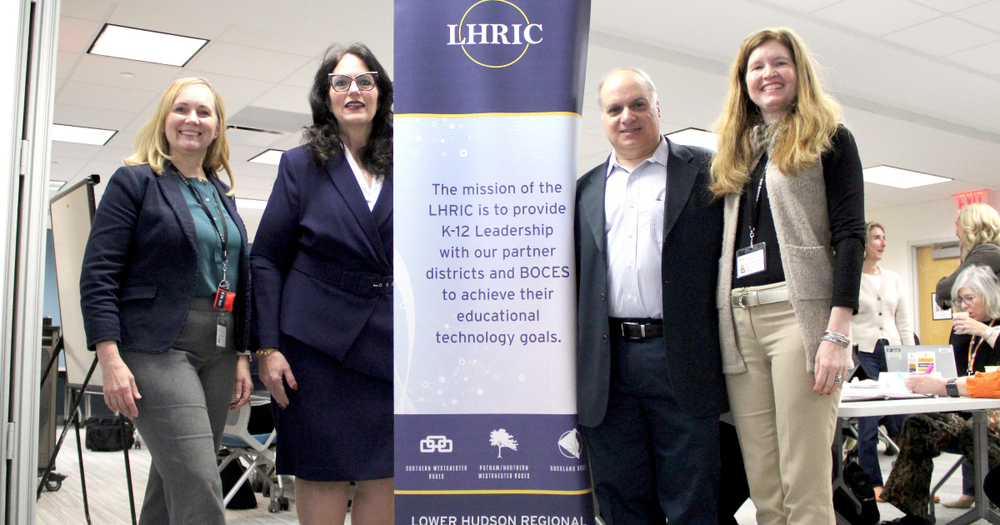
School and district partners from across the region celebrated 30 years of leadership and innovation in instructional technology at the Lower Hudson Regional Information Center’s annual Open House and Technology Leadership Institute Fall Kickoff.
TLI launched in 1997 with a mission to provide a professional forum that brought educational leaders together around the exciting possibilities and challenges that technology brings to K-12 instruction.
“What began as a collaborative effort to learn and lead together has grown into a thriving professional community,” Instructional Technology Manager Mary Lynn Collins-Callanan said. “When we sat in our director's office at the time, we had no idea it would endure for three decades, but here we are, celebrating 30 years of collaboration, innovation, and leadership.”
Dr. Ellen J. McDonnell recalled how TLI programming intertwined with her own career as an educator almost from the start.
“Now, as Executive Director of the LHRIC, I see TLI’s region-wide impact firsthand,” Dr. McDonnell said. “I am proud of what the program has accomplished and excited about its promise for continued innovation.”
Veteran educational technology leader and keynote speaker Jerry Crisci shared the same appreciation for TLI’s impact on him as a teacher and administrator.
Between the leading experts it brought to the region and the opportunities it provided to connect with fellow educators, TLI fostered an ideal environment for professional learning and collaboration, Mr. Crisci said.
“TLI continues to be an engine of innovation in the Lower Hudson Valley,” he added. “It offers an outstanding model for professional learning and collaboration that, frankly, should be replicated in other regions across the country.”
Mr. Crisci’s keynote addressed increasing concerns surrounding screen time and technology bans while exploring what meaningful technology experiences should look like in modern classrooms. Drawing on his own professional experience, Mr. Crisci unpacked the rapidly evolving role of generative AI in teaching, learning, and assessment.
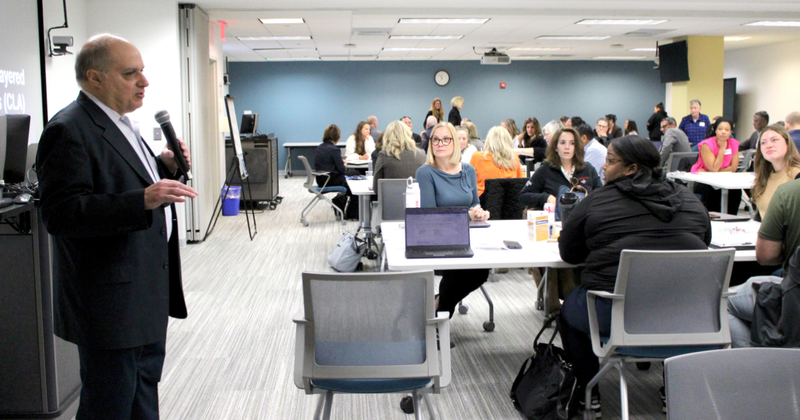
In 1999, he said, the TLI topic was the humanness of technology. Today, there’s a pushback—Dr. Crisci called it a techlash—that has the nation’s largest school districts, and some smaller ones, putting boundaries around students’ use of technology.
Drivers include anxiety over AI taking jobs and causing cognitive surrender as well as fostering misinformation and online bullying.
“We support EdTech because we believe in what it can do for kids,” he said. "I question how effective bans will really be as we work to prepare students for the future."
For one thing, he noted, AI is embedded everywhere, from web searches to the backbone of many platforms.
Later, Dr. Amy S. DelCorvo, CEO and Executive Director of the New York State Association for Computers and Technologies in Education (NYSCATE), brought attendees up to date on the proposed FOCUS Act, which would limit screen use, restrict AI and social media in classrooms, and prioritize analog learning in K–12 schools.
Dr. DelCorvo also moderated a panel discussion featuring Jamie Haug, Director of Technology for Pearl River; Dr. Andrew A. Taylor, Director of Technology and Innovation for Chappaqua; John Sebalos, Director of Technology for Pelham; Jim Treloar, Director of Technology and Innovation for Brewster; and Dr. Bhargav A. Vyas, Assistant Superintendent for Compliance and Information Systems and Data Protection Officer for Monroe-Woodbury.
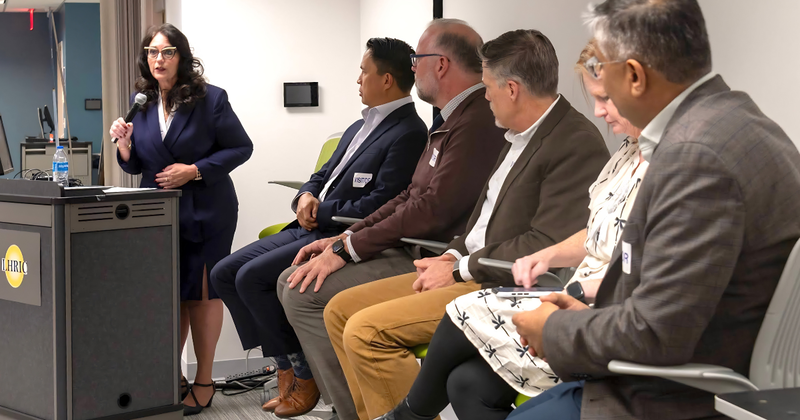
The regional panel and networking lunch gave educational leaders an opportunity to share practical strategies, exchange perspectives, and learn from one another. Throughout the day, a common theme emerged: educators need opportunities to collaborate, evaluate emerging trends, and make informed decisions that keep student needs at the center.
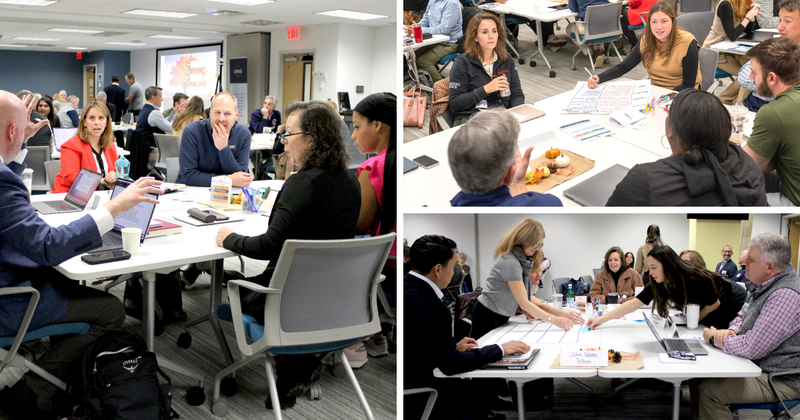
The Open House offered district partners a unique behind-the-scenes look at how LHRIC teams support their local schools. Attendees participated in dynamic, small-group, tabletop discussions with the LHRIC leadership team on critical educational topics.